01 / 05Arabic-first furniture store for the Saudi market2026
Diwan
Every piece tells the buyer, before they pay, if it fits the room and gets through the door.
- Laravel 12
- PHP 8.2
- MySQL
- Blade
- Tailwind 4
- Alpine.js
- Pest
- Claude API
- Vercel
At a glance
01Who is it for?
- The shopper furnishing a home in Saudi Arabia who wants to know, before paying, whether a piece fits and whether it gets there.
- The shop owner and team: they add pieces with real dimensions, set delivery cities and returns, and run orders from one panel.
- Whoever delivers: the way into the home is written on the order.
Before the project
In online furniture stores the buyer sees a photo on white and a centimetre figure that means nothing for their room. The sofa is ordered, arrives, and does not go through the door, or sticks in the lift or at the turn of the stairs.
- A number is not enoughNobody can picture 240 cm in their own room.
- The room is not everythingFitting the room is not getting there: the door, the lift and the stairs decide too.
- Promises nobody madeShops promise a fee, a day and a tax invoice before they know them.
The product
The product, as its users use it
Scroll to walk with the user one step at a time, each step on the screen where it actually happens.
Measure once
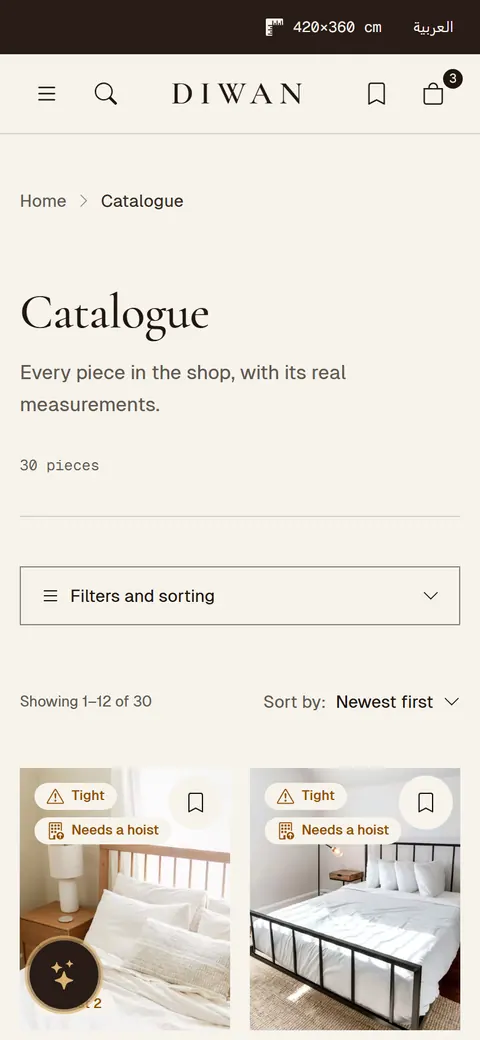
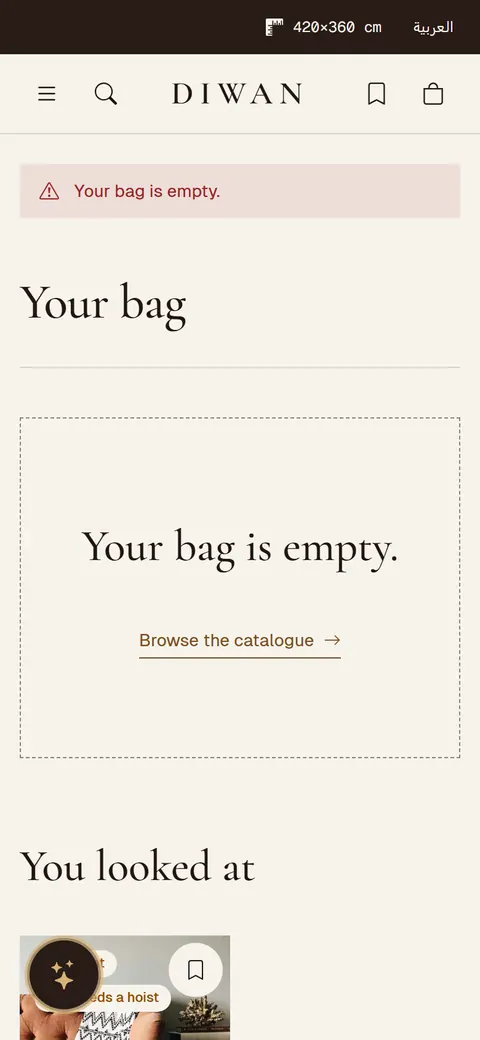
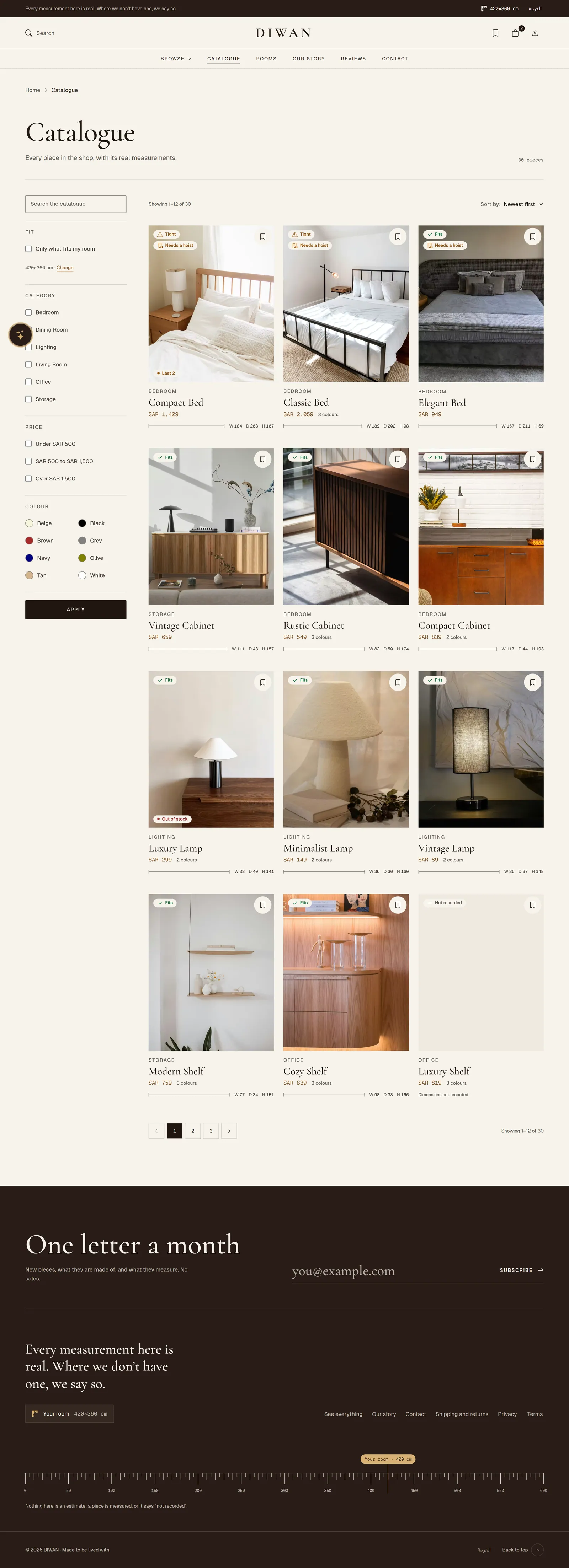
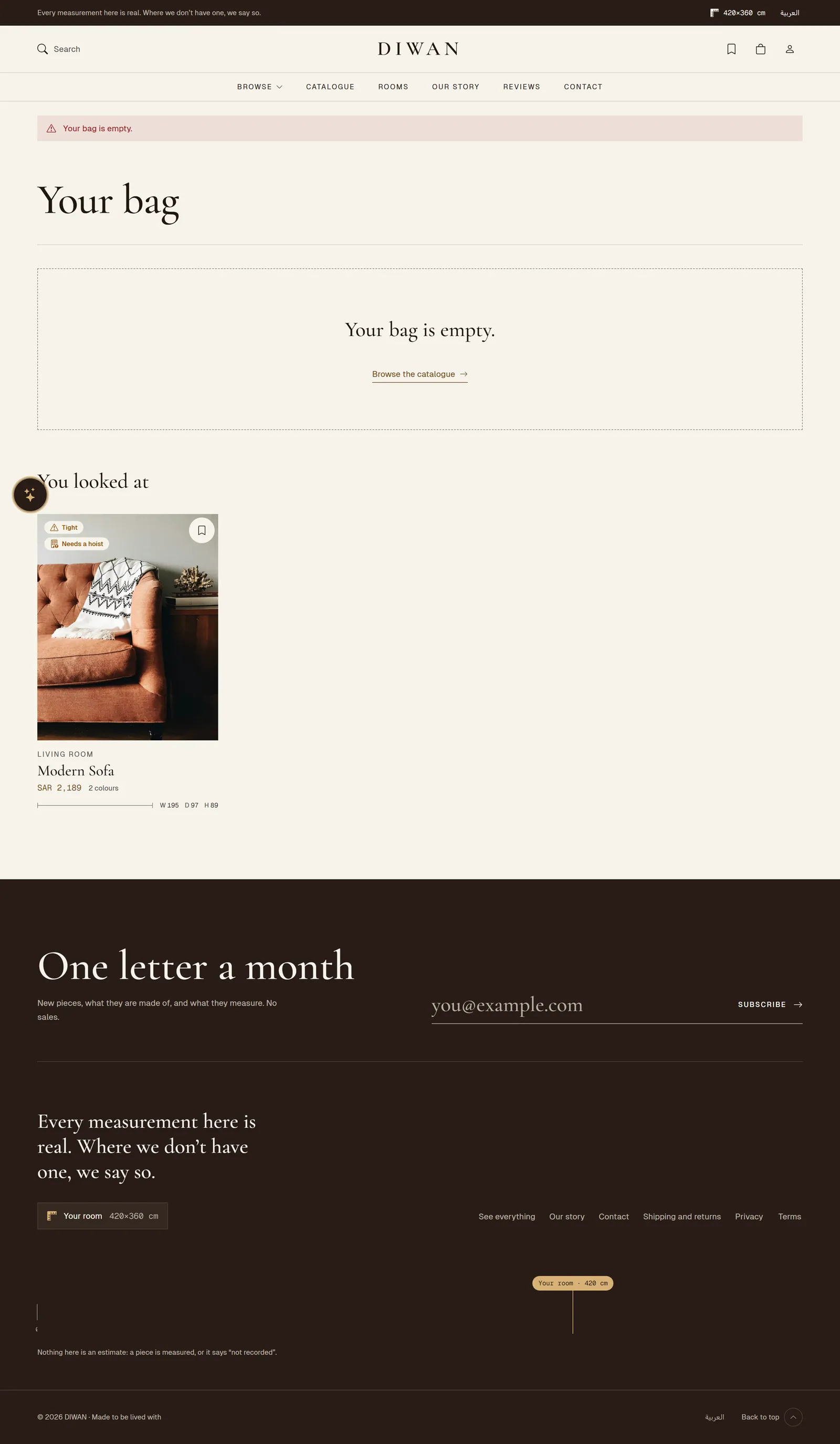
The customer saves the room’s width and length once, and every piece in the catalogue shows one word: fits, tight, or will not fit.
/en/products
The verdict and the reason
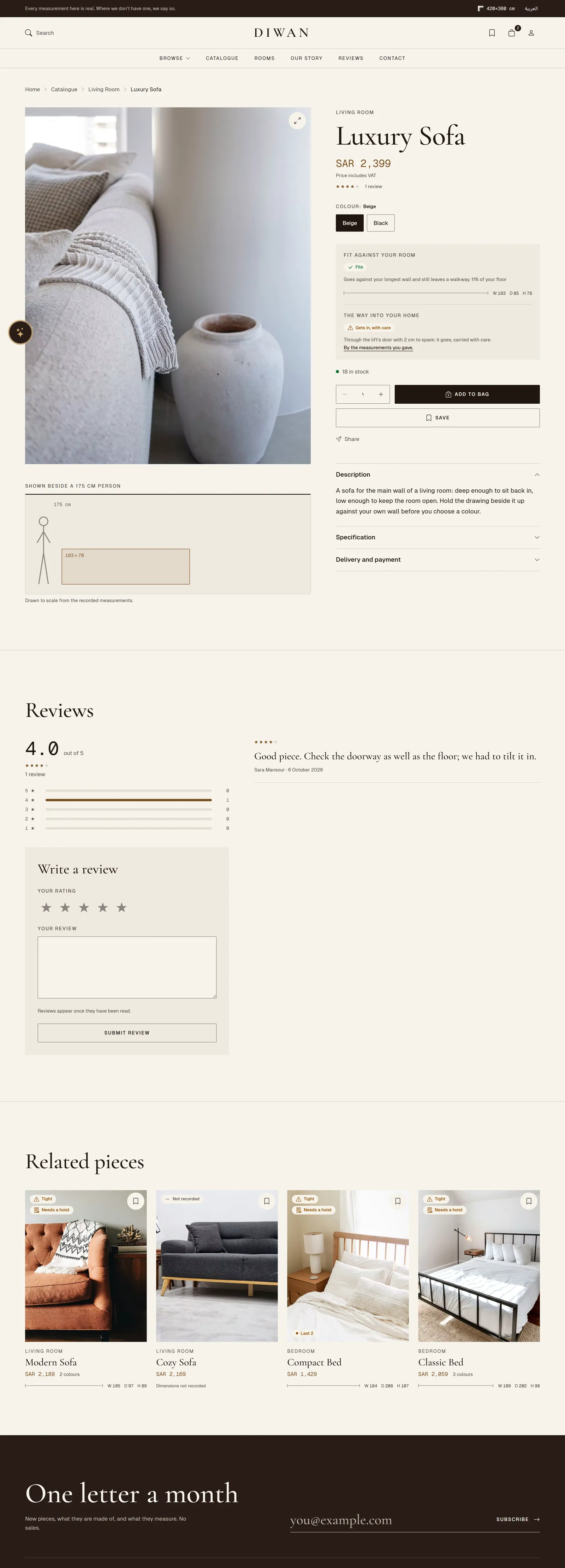
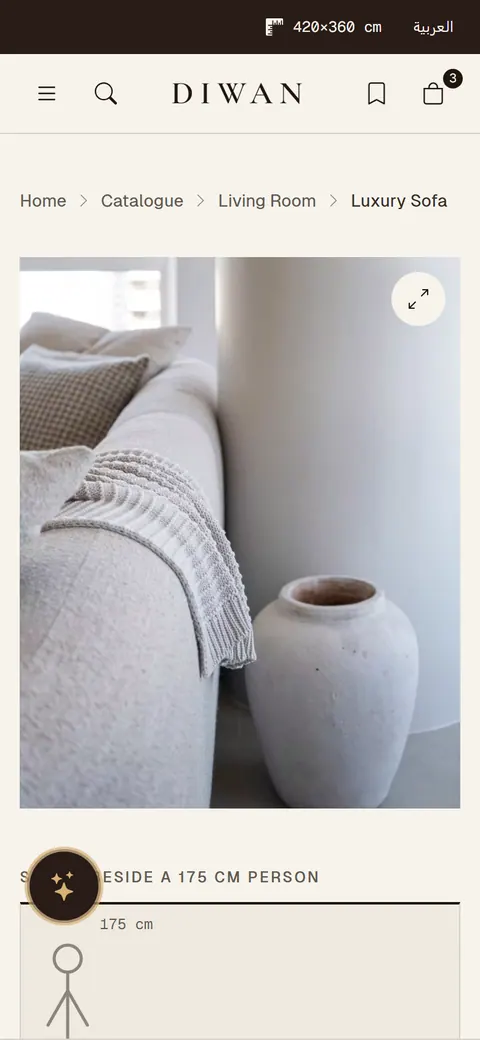
The product page says whether it fits and why, with a scale drawing beside a 175 cm person, so the size is seen rather than imagined.
/en/product/luxury-sofa
The way in
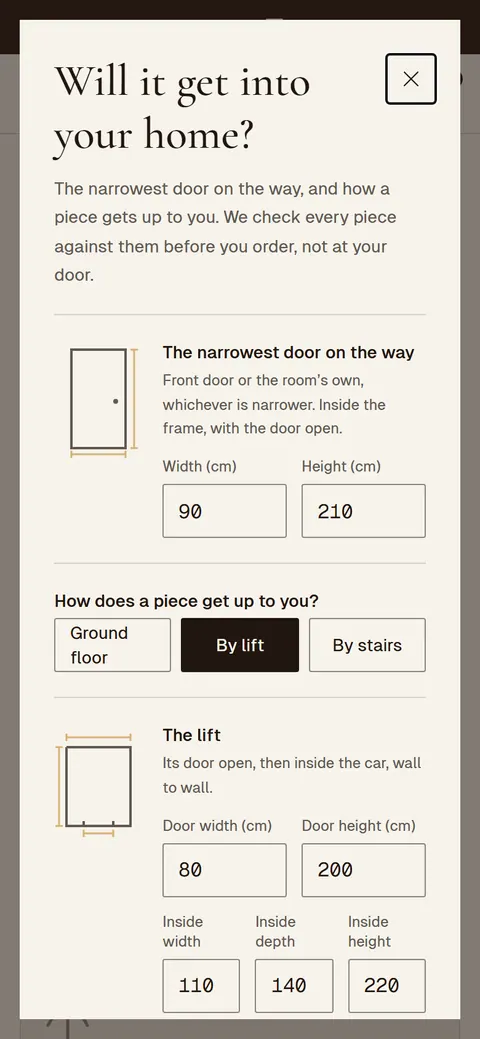
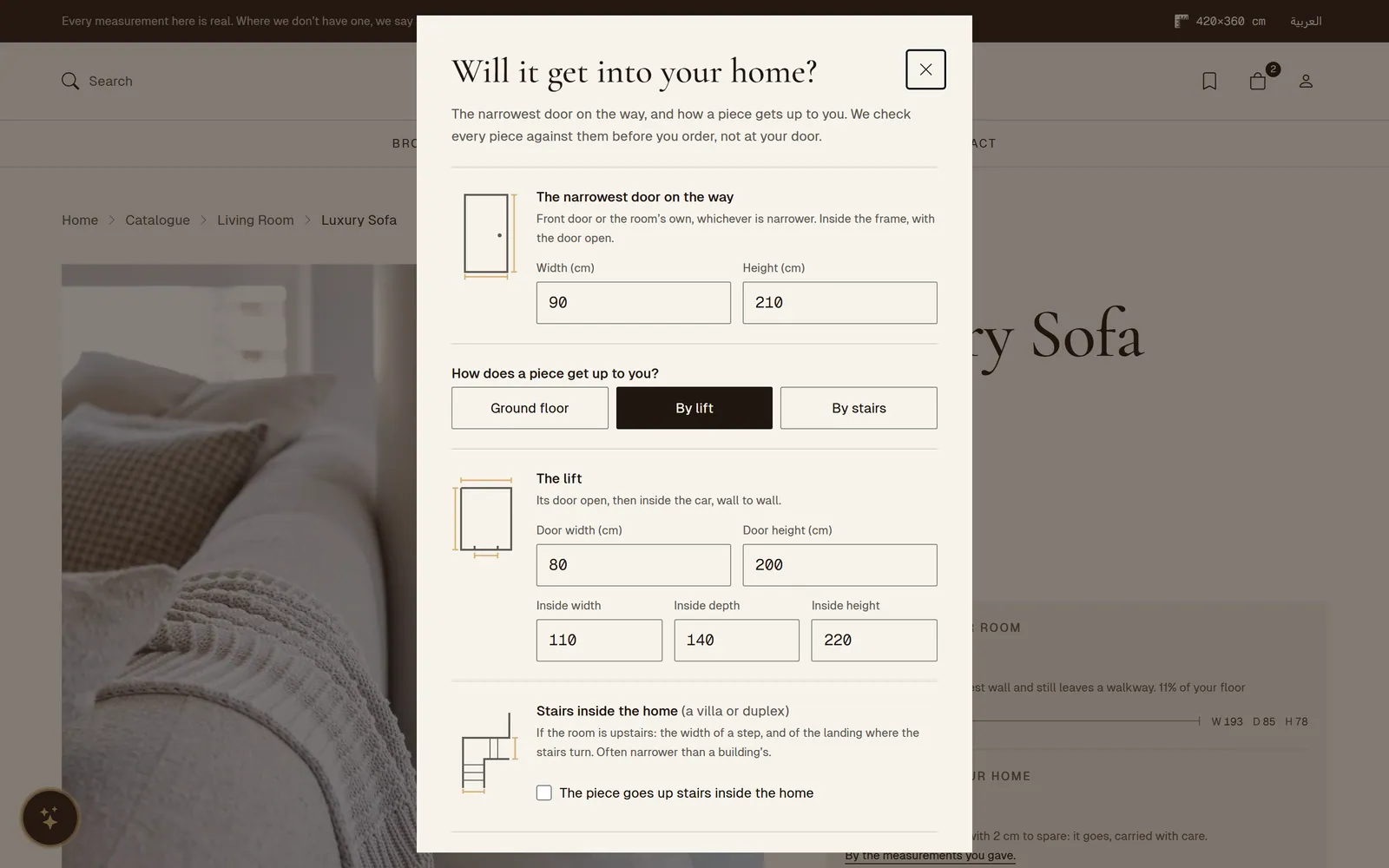
The customer adds the door, the lift or stairs and the balcony, and the piece says whether it gets there, where it would stick, or that it needs a hoist.
/en/product/luxury-sofa
City, fee, day
Choosing a city adds its delivery fee at once, and the customer books a delivery day, morning or evening. Payment is cash on delivery.
/checkout
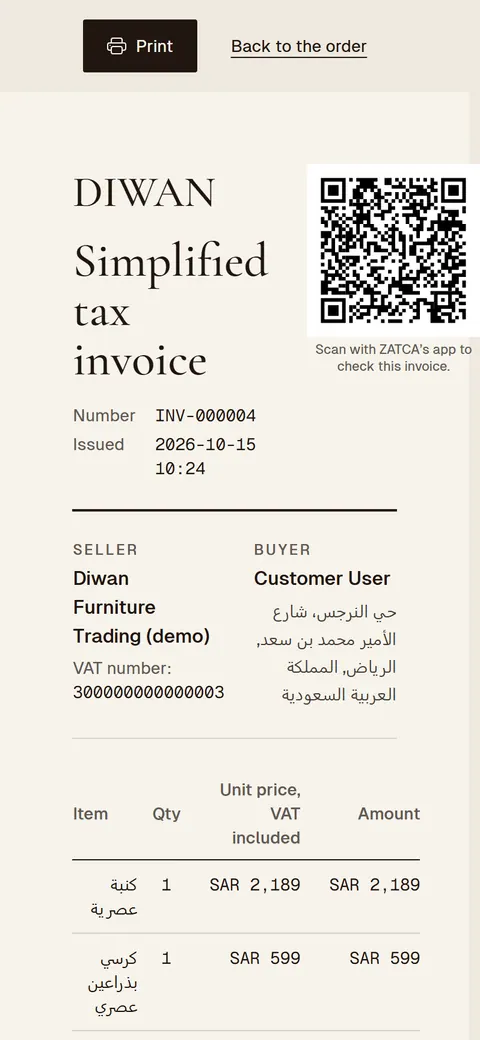
A proper invoice
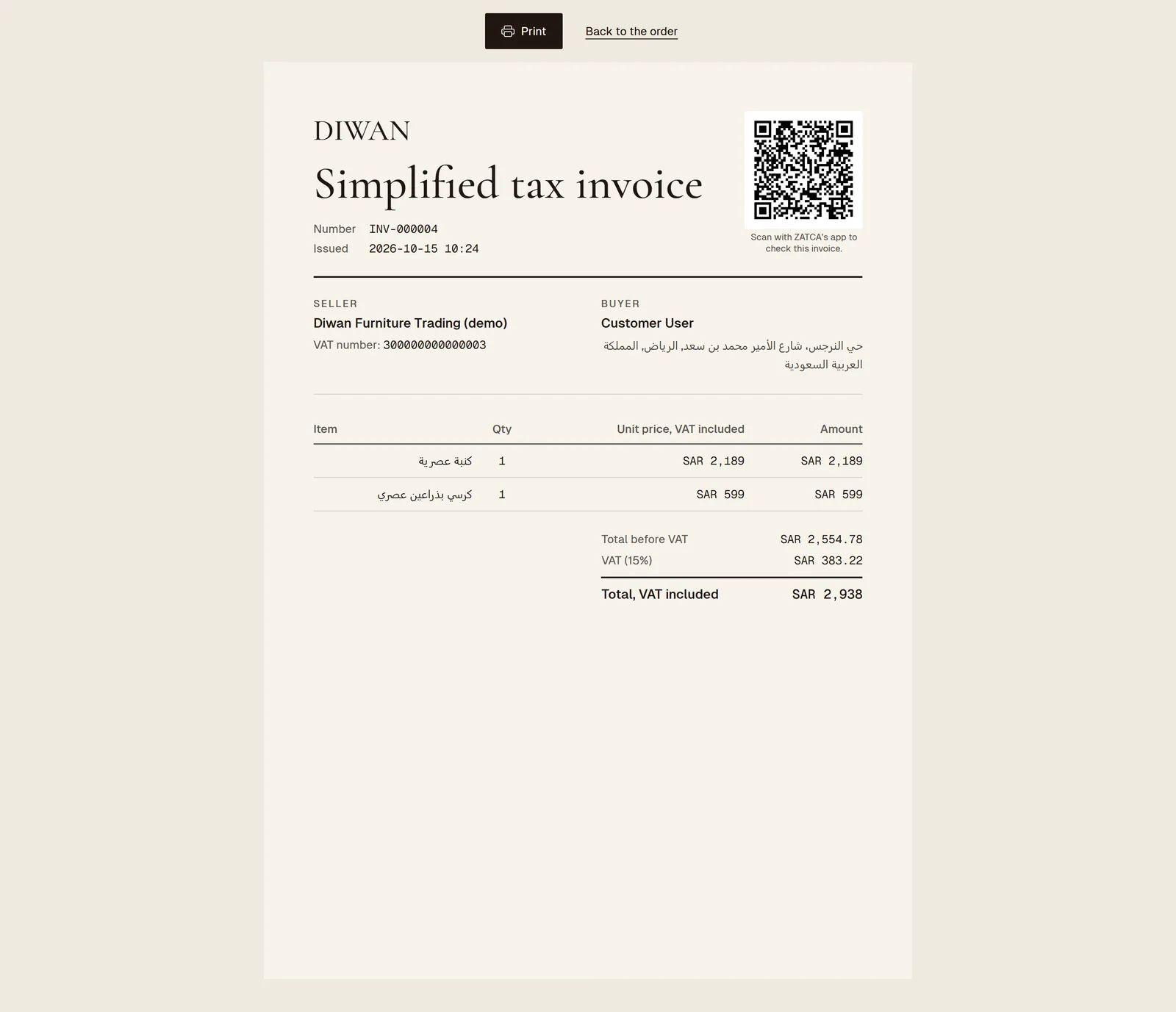
After delivery a simplified tax invoice with its ZATCA QR code is issued, returns are asked for with a reason, and the customer is asked once: did it get in?
/orders/4/invoice
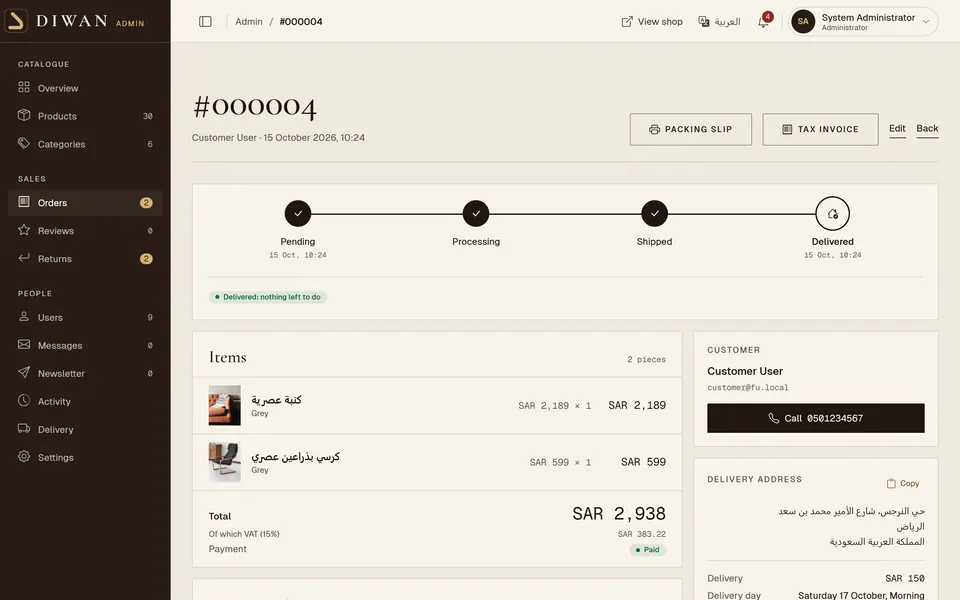
The shop’s side
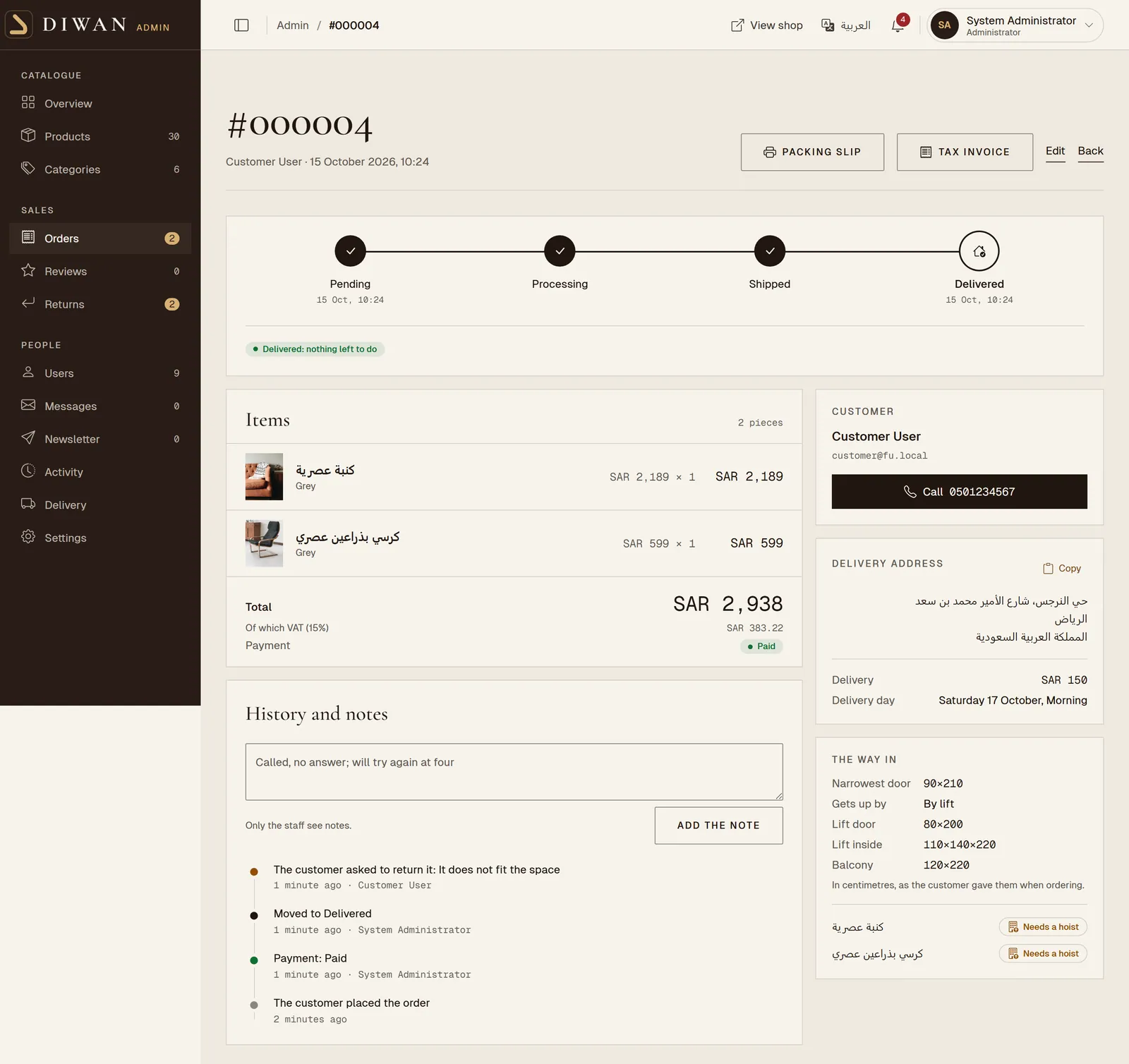
The team sees the order’s history and the customer’s way in before the van leaves, so the crew knows what is waiting for them.
/admin/orders/4
How it was solved
Built to hold
The decisions that make the promises above true, rather than a look on the screen.
The fit system
Three rules computed against the customer's own room: the piece must fit the longest wall, take no more than 60% of the floor, and have one face under 80 cm to clear a doorway. When more than one rule breaks, the customer is told the worst one, not the first checked.
The way in
The front door, then the lift or the stairs and their turn, then a villa's inner stairs, with the piece at the size it is carried. The worst step decides and is named, an unmeasured step stays unchecked, and when only the balcony clears it, it says: by hoist. The way in travels with the order for whoever delivers it, and after delivery the customer is asked once: did it get in?
A shop that promises only what it knows
Prices include 15% VAT and each order keeps its rate. The simplified tax invoice with its ZATCA QR code is issued only with a VAT number and after the sale. Each city's fee, the delivery days and the return period are the shop's to set, and until they are, the storefront says they are agreed on contact.
Stock decided in the database
Checkout locks the product row inside the transaction that writes the order, so two people cannot both get the last piece. A cart with one unavailable line fails whole, and cancelling or receiving a return puts stock back exactly once.
Worth explaining
Returns that measure the idea
A customer asks for a return with a reason, within the shop's period; the panel approves or declines, then receives the pieces back into stock. The overview counts the reasons, so the numbers show whether returns for size are actually few, which is what the shop was built for.
A demo account that breaks nothing
A viewer role sees the whole panel; every save or delete it tries is turned back with a message, and it cannot change its own account. That is why its sign-in is printed on the login page for anyone to try.
A design system enforced by tests
The design rules are unit tests over the Blade templates: no colour outside the token file, no query inside a template, every photograph through one component. A rule nobody checks is a rule that comes back.
Arabic first, at two addresses
Every page lives at /ar and /en, Arabic by default, with hreflang twins and a bilingual sitemap; the old addresses redirect.
The outcome
What was delivered
- 28
- screens in the product
- 76
- real screenshots
- 510
- automated tests
- 2
- full languages
- A live shop, with the admin panel open through a demo account that sees everything and saves nothing.
- Arabic and English, every page at two addresses, Arabic by default.
- 510 automated tests run on every push, and the site deploys only once they pass.
- The phase-one ZATCA invoice (QR code); phase two is stated plainly as not done.
- PASSThe last piece in stock cannot be sold twicediwan/tests/StockTest.php
- PASSAn order line survives the product being retireddiwan/tests/OrderHistoryTest.php
- PASSA piece is never said to get in while a step on its way is unmeasureddiwan/tests/PassageTest.php
and 507 more in the repository
Every screen
Every screen, as it is
Real screenshots of the project running — not stock imagery.
Every page in the project
Real screenshots of the project running — not stock imagery. · 76 screens